
How Often Should You Service Your AC? Home vs Commercial Schedules
Once a year is a rule of thumb, not a schedule. Usage hours, dust exposure and unit type decide the real interval — and the difference can be four visits a year.
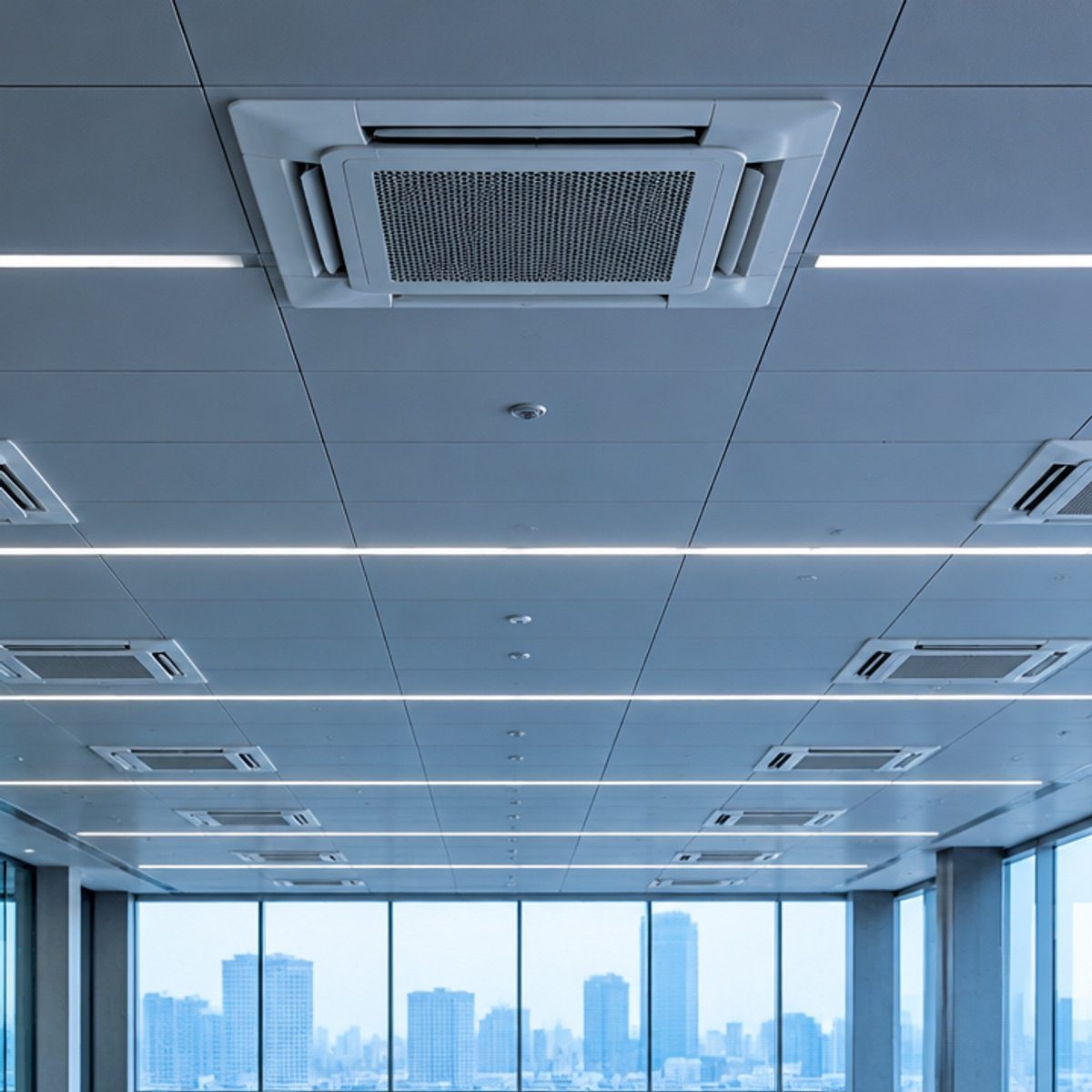
“Once a year” is the answer most people expect, and for a bedroom split with light use it is roughly right. For a gym unit running twelve hours a day it is badly wrong. This guide replaces the rule of thumb with a schedule you can actually apply, based on how the unit is used and what it is exposed to.
The variables that actually matter
Four factors decide service frequency, and they multiply rather than add.
Running hours. A bedroom unit running eight hours a night accumulates roughly 2,900 fan hours a year. A shop unit running twelve hours a day accumulates 4,400. Dust builds with airflow, so hours matter more than calendar age.
Dust load. Ground-floor flats facing a main road, units near construction, and units beside a kitchen exhaust all collect far more than a fourth-floor flat with closed windows.
Humidity. In the Mumbai metropolitan region, six months of high humidity encourages biological growth on coils. Coils that stay damp between cycles need more frequent attention.
Unit type. Window units clean faster and hold cooling longer. Cassette and ducted systems hide their filters above a ceiling, so they are often neglected until airflow collapses.
A schedule you can apply
| Setting | Typical use | Service interval |
|---|---|---|
| Bedroom split, upper floor, closed windows | 7–9 h/night, seasonal | Every 12 months |
| Living room split, roadside building | 6–10 h/day, year-round | Every 8–9 months |
| Ground-floor or construction-adjacent | Any | Every 6 months |
| Shop, clinic or small office split | 10–12 h/day | Every 6 months |
| Gym, restaurant or server room | 14–24 h/day | Every 3–4 months |
| Cassette or ducted, any setting | Varies | Every 6 months minimum |
Where two rows apply, take the shorter interval. A roadside ground-floor bedroom belongs on a six-month cycle, not twelve.
Why commercial units need a different approach entirely
A commercial installation is a fleet, not a unit. If a home AC fails, one room is uncomfortable. If four of eight office cassettes fail in June, work stops.
That changes the goal from “clean when dirty” to “never let a unit reach the point of failure in peak season”. In practice that means planned servicing outside operating hours, at a frequency set by load, plus a documented record per unit so recurring faults are visible.
This is the logic behind an Annual Maintenance Contract: a fixed number of visits per unit per year, scheduled in advance, with the same technician team each time. It also creates history. A unit serviced four times a year with the same team gets diagnosed faster on the fifth visit because someone remembers what changed.
Don’t wait for the calendar: the signs that need attention now
Regardless of schedule, service immediately if you notice:
- Reduced airflow at the louver compared with a month ago.
- A musty smell in the first minute of running.
- Water dripping or staining near the indoor unit.
- Ice on the coil or on the thin copper line.
- Longer run times for the same room temperature.
- Rattling or vibration from the outdoor unit.
Longer run times are the most overlooked. A dirty coil makes the compressor work harder for the same cooling, so electricity use climbs before comfort drops. If your bill rose sharply with no tariff change, airflow is the first place to look.
Filter cleaning is not servicing
Weekly or fortnightly filter rinsing is a user task, and it is worth doing — but it is not a substitute for service. Filters catch coarse dust. The fine fraction passes through and coats the coil and blower, which is where airflow is actually lost.
This is why a unit whose filters were always kept clean can still have a completely blocked blower wheel after three years. The symptom is the same as a refrigerant fault — weak, slightly cool air — and customers often assume the worst.
Think of filters as maintenance between services rather than maintenance instead of services. The service is what removes what the filters could not stop.
Building a schedule that survives real life
The practical approach: pick two fixed dates a year — before summer and after monsoon — and adjust from there based on how the unit behaves. In the Kalyan, Dombivli and Thane belt, May and October are the natural slots.
For a home, that is enough. For commercial premises, put the dates in a contract with visit counts per unit, a response time for breakdown calls, and a named contact on both sides. Include a clause for how additional units added mid-term are handled — fleets grow, and a contract that does not anticipate it creates arguments.
Finally, keep a one-line log per unit: date, service level, any parts changed, and the next due date. That log is worth more than any rule of thumb, because it is about your equipment rather than an average.

Key takeaways
- Running hours and dust load decide frequency, not age.
- Roadside ground-floor units should be on a six-month cycle.
- Commercial units need planned visits outside business hours.
- Rising electricity use usually means dirty coils, not a failing compressor.
- Filter rinsing is between services, never instead of them.
Frequently asked questions
Is one service a year enough for a home AC?
For a bedroom split with light seasonal use, yes. For year-round use, roadside locations or ground floors, six to nine months is more realistic.
How often should office ACs be serviced?
Every six months for normal office hours, and every three to four months for gyms, restaurants or any unit running near continuously.
Does servicing extend AC life?
Regular cleaning keeps the compressor from working against restricted airflow, which is the main avoidable cause of early compressor failure.
Transparent pricing
Featured AC services and rates
Published rates straight from the AK Aircon Services rate card — 13 categories covering service, installation, gas charging, repair, parts and material.
| Service | Split AC | Window AC |
|---|---|---|
| Dry / Lite service | ₹399 | ₹399 |
| Standard jet service | ₹549 | ₹549 |
| Foam jet service | ₹649 | ₹649 |
| Deep dismantle service | ₹1,349 | — |
| Inspection / diagnosis visit | ₹299 | — |
| Gas charging | ₹2,499 | — |
| Leakage repair | ₹1,499 | — |
| Standard installation | ₹1,499 | ₹1,499 |
| Uninstallation | ₹899 | ₹899 |
| Indoor unit shifting | ₹1,299 | — |
| PCB / electrical repair | ₹1,799 | — |
| Compressor replacement | ₹6,499 | — |
| Copper pipe (per metre) | ₹550 | ₹550 |
Prices include labour and material unless a note states otherwise. Installation material is extra. Units above 2.2 tons are quoted individually.
Need a specific price?
Tell us the unit type and the service. We confirm the exact charge before work starts.
See all 13 categoriesRates are transcribed from the AK Aircon Services rate card. Charges for unusual site conditions or non-standard equipment are confirmed before work begins.