
AC Making Noise: What Rattling, Buzzing and Clicking Actually Mean
Every AC makes some sound. The useful skill is telling a loose screw from a compressor on its way out — because one is a ₹300 visit and the other is ₹6,499.
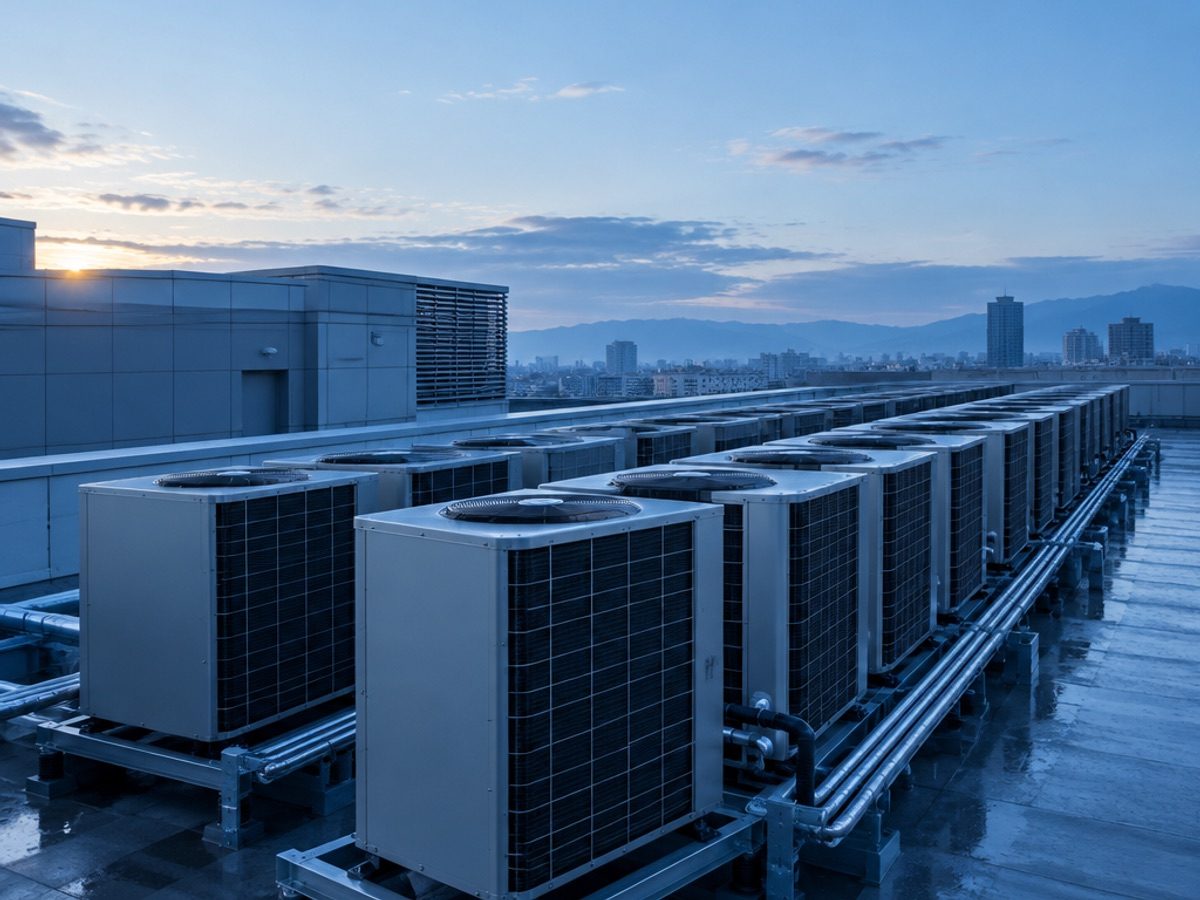
Noise complaints arrive in two flavours: "it has always been like that" and "it started last Tuesday". The second is more useful, because a change in sound almost always tracks a change in the machine. Work through the sounds below in the order they appear — cheapest cause first.
Rattling: almost always something loose
A rattle is a vibration, not a fault in the refrigeration circuit. Common sources, in order of how often we find them:
- Loose casing screws on the indoor unit or the outdoor top cover. Four screws, two minutes.
- Pipe vibrating against a wall or bracket where the insulation has worn through. Re-clip and re-insulate.
- Blower wheel out of balance from dust build-up on one side. This one needs the unit opened and cleaned.
- Loose bracket anchor in the outdoor wall. This is the one to check first if the noise is new and the unit is on the facade.
If the rattle stops when you press a hand on the casing, it is a case or screw issue. If it continues, look at the blower.
Buzzing: electrical or vibration
A steady low buzz is usually the contactor or the outdoor fan capacitor. A harsher buzz that appears only at start-up is often a relay chattering because the supply voltage is low.
In Mumbai’s older buildings and in parts of Dombivli and Kalyan, evening voltage sag to 190V is common. The compressor tries to start, fails, retries — that cycle sounds like a buzz followed by a click, and it will destroy the compressor winding within weeks if left alone.
The cheap test: does the buzz coincide with the lights dimming? If yes, it is supply-related, and a voltage stabiliser is the fix rather than a repair.
Clicking: normal, or a capacitor failing
One click when the thermostat calls for cooling and one when it stops is the relay doing its job. Rapid clicking every few seconds means the compressor is short-cycling.
The two usual causes are a failing run capacitor (₹400–₹900 fitted) and a low refrigerant charge triggering the low-pressure cut-out. Both are diagnosable in a single visit. Neither gets better by waiting.
Grinding or screeching: stop using it
Metal-on-metal sound from the outdoor unit is the fan motor bearing. If the fan is still turning, the bearing has failed but not seized. If it has stopped and the unit still runs, the compressor is now working against no condenser airflow and will overheat.
Switch the unit off at the isolator and book a visit. Continuing to run it converts a ₹1,200 fan motor into a compressor replacement.
Hissing at the indoor unit
A hiss at the flare joint or along the pipe is refrigerant escaping. It is often faint at first and easy to dismiss, especially if cooling still seems acceptable.
Check for oil residue at the joint — refrigerant leaks carry compressor oil with them, and the resulting oily patch is the giveaway. This needs a leak test and repair, not a top-up.
Water gurgling or a dripping sound
Gurgling from the indoor unit is usually normal refrigerant flow at start-up. A persistent trickle or drip sound is a drain problem, not a noise problem — the tray is filling and not draining freely, which becomes a ceiling stain within a fortnight.
If you hear it and can also see dampness near the indoor unit, treat it as a leak call rather than a noise call.
When to call, and what to say
Call today for: grinding, rapid clicking, hissing with oil residue, or any noise accompanied by a drop in cooling or water.
Call this week for: a rattle you can localise, a buzz that only happens at start-up, or a noise that began after a service visit.
When you call, say what the sound is, when it started, whether the unit is still cooling, and whether it is indoor or outdoor. That single description usually cuts the diagnosis to one visit.
Key takeaways
- A rattle is vibration: screws, pipe work or an unbalanced blower.
- Buzzing that coincides with dimming lights usually means low supply voltage.
- Rapid clicking is a capacitor or a low charge — do not wait.
- Grinding means stop using the unit; running it risks the compressor.
- Hissing plus an oily patch at a joint is a refrigerant leak.
Frequently asked questions
Is a rattling AC dangerous?
Not usually, but it spreads. A vibrating pipe wears through its insulation and then its wall, and a loose outdoor bracket gets looser. Fixing it early keeps the repair in the hundreds rather than the thousands.
Why does my AC buzz only in the evening?
Evening voltage sag in older buildings is common. The compressor struggles to start on low voltage, which sounds like a buzz-and-click cycle. A stabiliser is usually the answer rather than a repair.
Can I just turn the noise off by lowering the fan speed?
That hides a blower problem without fixing it. It is fine as a stopgap for a night, but a dust-loaded blower wheel will keep getting worse and start throwing imbalance vibration into the casing.
Transparent pricing
Featured AC services and rates
Published rates straight from the AK Aircon Services rate card — 13 categories covering service, installation, gas charging, repair, parts and material.
| Service | Split AC | Window AC |
|---|---|---|
| Dry / Lite service | ₹399 | ₹399 |
| Standard jet service | ₹549 | ₹549 |
| Foam jet service | ₹649 | ₹649 |
| Deep dismantle service | ₹1,349 | — |
| Inspection / diagnosis visit | ₹299 | — |
| Gas charging | ₹2,499 | — |
| Leakage repair | ₹1,499 | — |
| Standard installation | ₹1,499 | ₹1,499 |
| Uninstallation | ₹899 | ₹899 |
| Indoor unit shifting | ₹1,299 | — |
| PCB / electrical repair | ₹1,799 | — |
| Compressor replacement | ₹6,499 | — |
| Copper pipe (per metre) | ₹550 | ₹550 |
Prices include labour and material unless a note states otherwise. Installation material is extra. Units above 2.2 tons are quoted individually.
Need a specific price?
Tell us the unit type and the service. We confirm the exact charge before work starts.
See all 13 categoriesRates are transcribed from the AK Aircon Services rate card. Charges for unusual site conditions or non-standard equipment are confirmed before work begins.