
What AC Tonnage Do You Need? A Room-by-Room Guide
The area rule gets you within one size. Five corrections decide the rest, and getting them wrong is the most common reason a correctly installed AC still feels weak.
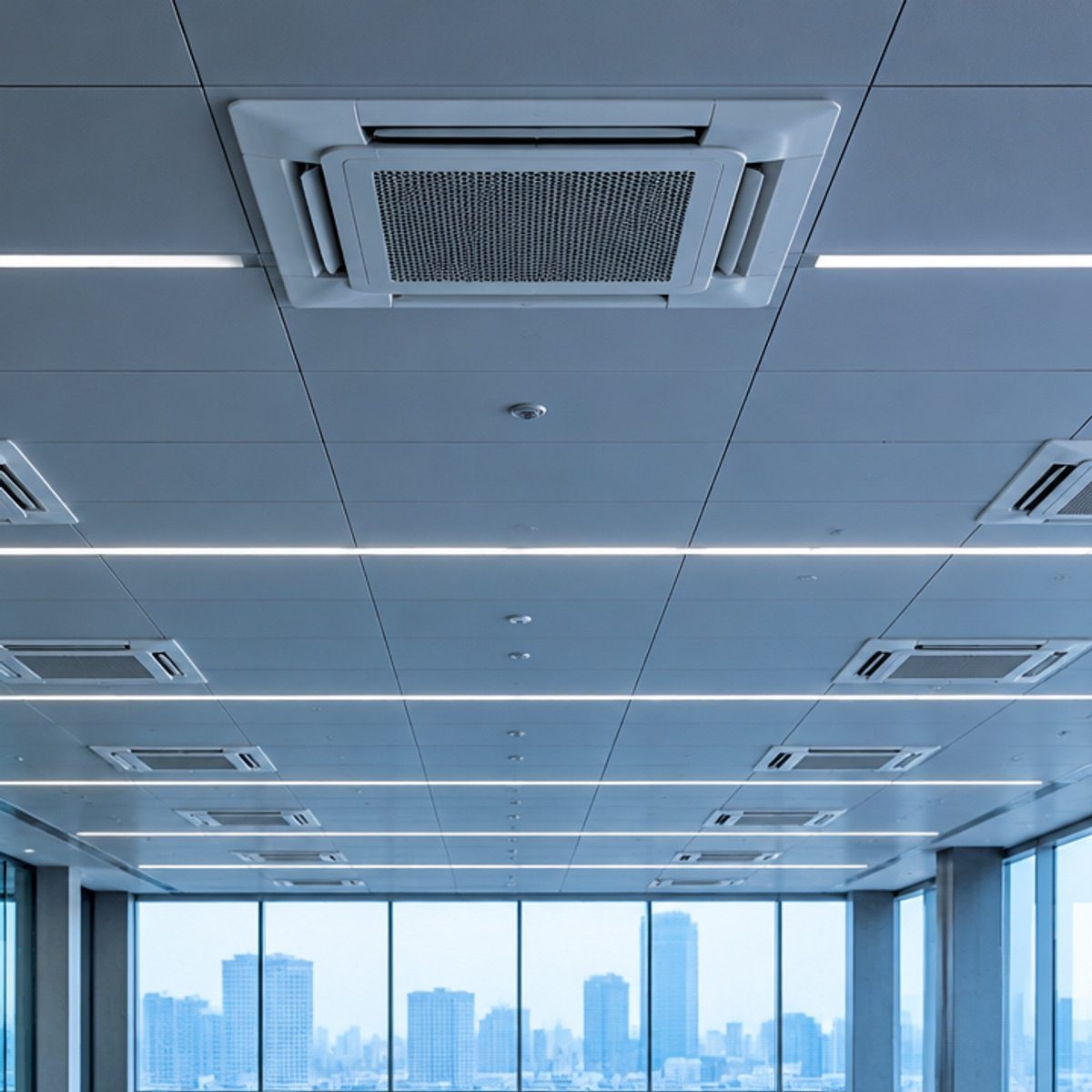
Showroom sizing advice is a table on a stand: 100 to 120 sq ft for one ton, 120 to 180 for 1.5 ton. It is a reasonable starting point and a poor finishing point, because it assumes a room with no sun, no glass and no people in it.
The base rule, stated honestly
| Capacity | Typical room area | Suits |
|---|---|---|
| 0.8 ton | up to 90 sq ft | Small bedroom, study |
| 1.0 ton | 90 – 120 sq ft | Standard bedroom |
| 1.5 ton | 120 – 180 sq ft | Master bedroom, small living room |
| 2.0 ton | 180 – 250 sq ft | Living room, small office cabin |
These numbers assume a 9 to 10 foot ceiling, one window, two occupants and no direct afternoon sun. Change any of those and the table shifts.
The five corrections
- West or south-west facing with direct sun: size up one step. A sun-loaded wall can add the equivalent of 30 sq ft of load.
- Top floor with an uninsulated slab: size up one step. The ceiling radiates heat all evening.
- Large glass area or a balcony door: size up one step if the glass is single-pane.
- Kitchen open to the living room: size up one step. Cooking heat is continuous, not intermittent.
- More than four regular occupants, or a home office with equipment: size up one step.
Two corrections together usually means one size up. Three or more means consider two, or fix the building problem instead — a window film and a ceiling fan cost less than an extra half ton and work better.
Why oversizing is worse than it sounds
An oversized AC reaches set temperature quickly and stops. The room is cool but the air is still humid, because dehumidification happens while the coil is running and it did not run long enough. You end up with a cold, clammy room — the classic Mumbai complaint about "AC cooling but feeling sticky".
An oversized inverter unit modulates down and handles this better than a fixed-speed one, but it still short-cycles in a small room. Beyond comfort, short cycling means more compressor starts, and starts are what wear a compressor.
Undersizing has an obvious symptom — it never quite gets there in May — and it is at least honest about the problem.
The ceiling height factor
The area table assumes a 9 to 10 foot ceiling. Older Kalyan and Dombivli tenements often run 11 to 12 feet, which is 20% more air volume for the same floor area. A 120 sq ft room with a 12-foot ceiling needs the cooling of a 145 sq ft room at standard height.
Measure the height before you buy. It is the correction most often missed, and it is free to check.
What a load calculation adds
A proper heat load calculation takes wall construction, glass area and orientation, occupancy, lighting and equipment into account and returns a figure in BTU or kW rather than tons. For a single bedroom it is overkill. For a living room open to a dining area, or any commercial space, it prevents an expensive mistake.
We do this free on AMC site visits, because a fleet that is systematically undersized generates call-outs that nobody can fix with a service.
A worked example
A 165 sq ft master bedroom on the top floor of a Thane building, west-facing with a balcony door and single-pane glass, two occupants.
Base reading for 165 sq ft: 1.5 ton. Top floor: one step up. West-facing with glass: another consideration, but two corrections together on this size warrant a 1.8 to 2.0 ton unit rather than a nominal 1.5.
Alternatively, 1.5 ton with a reflective film on the balcony glass and a ceiling fan will outperform a 2-ton unit in the same room, for less money. That is the answer we usually give.
Key takeaways
- The area table assumes 9–10 foot ceilings, one window and no direct sun.
- West-facing, top floor, large glass, open kitchen and high occupancy each shift you up a size.
- Oversizing causes short cycling and a cold but humid room.
- Measure ceiling height — older flats are often 11–12 feet.
- Film on hot glass plus a ceiling fan can beat buying more tonnage.
Frequently asked questions
Is 1.5 ton enough for a 150 sq ft room?
Yes for a normal mid-floor room with a standard ceiling. Add a step if it is top floor, west-facing with large glass, or has a 12-foot ceiling.
Does a bigger AC cool faster?
It cools the air faster and stops sooner, which leaves the room more humid. In a small room that feels worse, not better, and the extra compressor starts shorten its life.
Should I size for the living room or the whole flat?
Size per room, per unit. A single large unit trying to cool a flat through open doors will run continuously and satisfy neither room comfortably.
Transparent pricing
Featured AC services and rates
Published rates straight from the AK Aircon Services rate card — 13 categories covering service, installation, gas charging, repair, parts and material.
| Service | Split AC | Window AC |
|---|---|---|
| Dry / Lite service | ₹399 | ₹399 |
| Standard jet service | ₹549 | ₹549 |
| Foam jet service | ₹649 | ₹649 |
| Deep dismantle service | ₹1,349 | — |
| Inspection / diagnosis visit | ₹299 | — |
| Gas charging | ₹2,499 | — |
| Leakage repair | ₹1,499 | — |
| Standard installation | ₹1,499 | ₹1,499 |
| Uninstallation | ₹899 | ₹899 |
| Indoor unit shifting | ₹1,299 | — |
| PCB / electrical repair | ₹1,799 | — |
| Compressor replacement | ₹6,499 | — |
| Copper pipe (per metre) | ₹550 | ₹550 |
Prices include labour and material unless a note states otherwise. Installation material is extra. Units above 2.2 tons are quoted individually.
Need a specific price?
Tell us the unit type and the service. We confirm the exact charge before work starts.
See all 13 categoriesRates are transcribed from the AK Aircon Services rate card. Charges for unusual site conditions or non-standard equipment are confirmed before work begins.