
Packers and Movers Cost: What Actually Drives the Quote
Two quotes for the same flat can differ by 40 percent and both be fair. Here are the six variables that explain the gap — and how to compare properly.
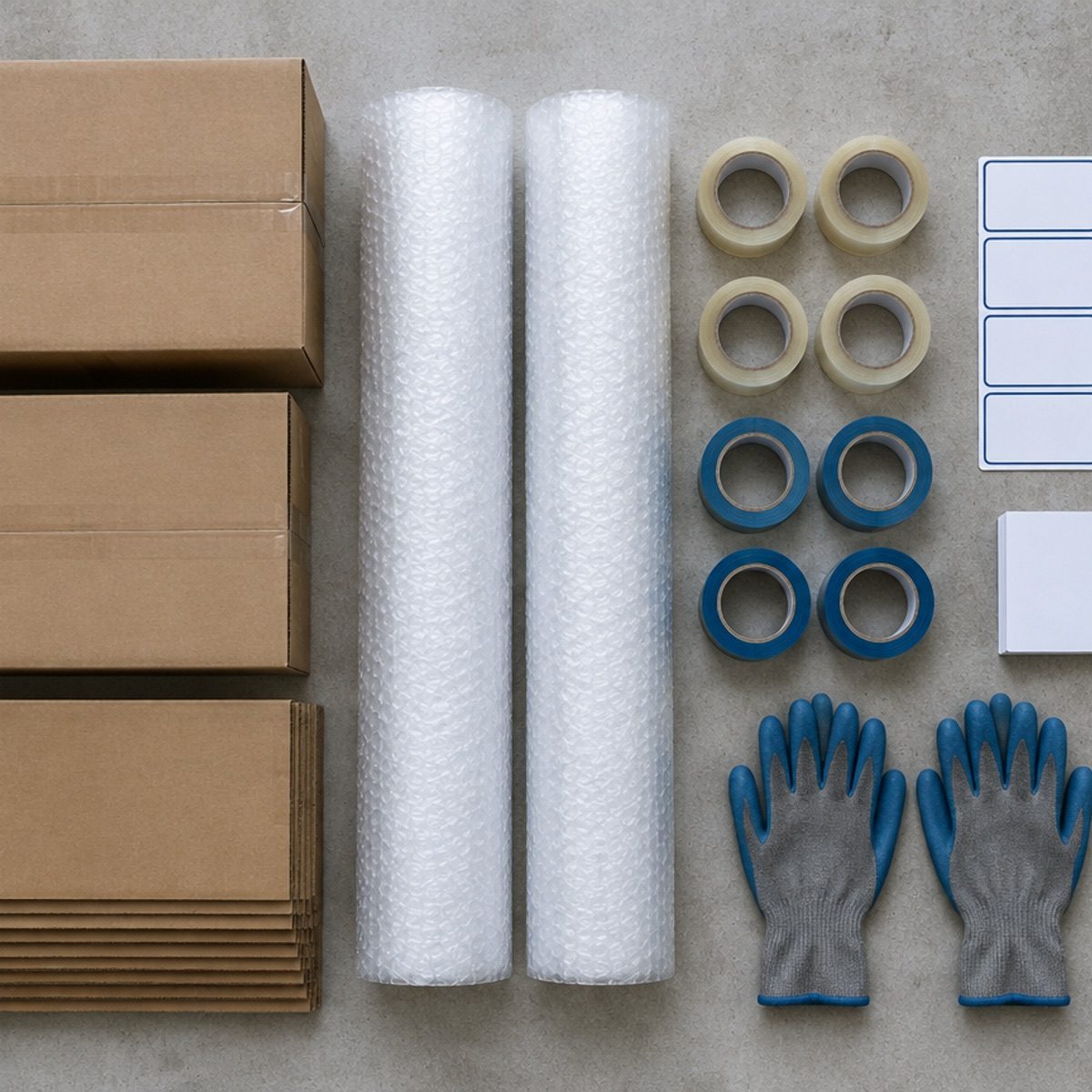
Moving quotes feel arbitrary until you see the inputs. A move is priced on volume, access, distance, material, labour and risk — and most of those are visible before anyone quotes. Understanding them turns a conversation about price into a conversation about scope, which is the only way to compare two providers honestly.
1. Volume, not house size
Volume is measured in cubic feet of goods, and it drives truck size, crew size and packing material. A 1BHK with a bed, two wardrobes, a sofa and a fridge is around 350–500 cubic feet. A furnished 2BHK with a dining set, washing machine, three wardrobes and a study can reach 900–1,200.
This is why “1BHK rate” enquiries produce inconsistent answers. Two 1BHKs can differ by a factor of two in volume.
The practical fix: ask for the quote in two parts — a fixed component for the goods on the inventory list, and a per-carton rate for anything added. That keeps the estimate honest and predictable if packing produces more boxes than expected.
2. Distance and route
Local moves inside Kalyan, Dombivli, Thane and Mumbai are priced largely on time, because the truck is occupied for the day regardless of kilometres. A fifteen-kilometre move with bad access can take longer than a forty-kilometre one on a clear road.
Intercity moves within Maharashtra add tolls, permits, driver allowance and often a per-kilometre rate with a minimum. Outstation moves to other states also involve transit time and, occasionally, octroi or entry charges depending on the destination.
Ask whether the quoted price includes tolls and permits. That single line is a common source of an unexpected addition at delivery.
3. Floors and lift access
This is the most underestimated factor. Carrying a wardrobe up four floors without a lift can take longer than packing an entire room.
Where a lift exists, its size matters: many society lifts cannot take a six-foot wardrobe, so that item goes by stairs regardless. Ask the provider to confirm the largest item and the lift dimensions.
Quotes usually specify a floor count and a lift assumption. If the building has no lift, expect a per-floor charge. If the lift is available but must be padded and booked, that is a separate line item — and it is worth paying, because a scratched lift lobby becomes a society deposit dispute.
4. Packing material and who packs
There are three common packing models and the price difference is real:
- Customer packs, crew carries. Cheapest, and highest risk for fragile items. Suitable for a limited move or a single room.
- Crew packs standard items. Cartons, bubble wrap, stretch film and tape included. The normal choice for a household.
- Crew packs with custom crating. Wooden crates for TVs, glass, art or machinery. Adds cost but is the only reliable protection for high-value fragile items.
Ask what material is included per carton: single-wall or double-wall boxes, how many layers of bubble wrap on glassware, and whether mattresses get covers. These details are what the difference in price is buying.
5. Labour, timing and the day itself
Crew size is priced, and so is the time of day. Weekends and month-ends are peak; the first and last days of a month are the busiest in any city, and availability drops.
A three-person crew is standard for a 1BHK, four to five for a 2BHK. If the quote assumes two people for a load that needs four, the job will run long and you will be asked for more labour on the day.
Loading and unloading are physical work with a real ceiling. Plan for the crew to take breaks; a rushed load damages more than it saves.
6. Risk: insurance, valuation and the small print
Transit damage happens. What varies is who pays for it.
Ask specifically: is there transit insurance, what is the declared value, what is the excess, and how is a claim filed? Some providers include basic cover with a low declared value per item — which is fine for a carton of utensils and useless for a television.
The clause to read carefully is the liability limit. A common formulation caps liability at a multiple of the freight charge, which rarely covers electronics. If you are moving a large TV, a desktop setup or anything with a resale value above a few thousand rupees, ask for extended valuation and put the item on the inventory with its value noted.
How to compare three quotes
Normalise before deciding:
| Compare | What to check |
|---|---|
| Volume assumed | Same inventory list given to all three |
| Packing model | Who packs, what material |
| Floors and lift | Assumptions stated, not implied |
| Inclusions | Tolls, permits, unpacking, debris removal |
| Liability | Declared value and claim process |
| Payment | Advance percentage and balance timing |
Then decide. The cheapest quote with customer packing and capped liability is not the same product as a mid-priced quote with full packing and extended valuation. Compare products, not totals — and get the final scope in writing before the crew is booked.

Key takeaways
- Volume in cubic feet drives the price, not the number of bedrooms.
- Ask for a fixed component plus a per-carton rate for extras.
- Confirm tolls, permits and unpacking are in or out of the quote.
- Lift size decides whether large furniture goes by stairs.
- Check the liability cap before trusting “insurance included”.
Frequently asked questions
How much do packers and movers charge for a 2BHK locally?
It depends on volume, floors and packing model. Ask for a quote against a written inventory list so three providers price the same goods.
Is packing material included in the quote?
Usually with a full-service move, but confirm carton grade, bubble wrap layers and mattress covers. Customer-packed moves exclude material.
What happens if something breaks in transit?
It depends on declared value and the liability clause. Photograph items before packing and note damage on the completion sheet at delivery.
Transparent pricing
Featured AC services and rates
Published rates straight from the AK Aircon Services rate card — 13 categories covering service, installation, gas charging, repair, parts and material.
| Service | Split AC | Window AC |
|---|---|---|
| Dry / Lite service | ₹399 | ₹399 |
| Standard jet service | ₹549 | ₹549 |
| Foam jet service | ₹649 | ₹649 |
| Deep dismantle service | ₹1,349 | — |
| Inspection / diagnosis visit | ₹299 | — |
| Gas charging | ₹2,499 | — |
| Leakage repair | ₹1,499 | — |
| Standard installation | ₹1,499 | ₹1,499 |
| Uninstallation | ₹899 | ₹899 |
| Indoor unit shifting | ₹1,299 | — |
| PCB / electrical repair | ₹1,799 | — |
| Compressor replacement | ₹6,499 | — |
| Copper pipe (per metre) | ₹550 | ₹550 |
Prices include labour and material unless a note states otherwise. Installation material is extra. Units above 2.2 tons are quoted individually.
Need a specific price?
Tell us the unit type and the service. We confirm the exact charge before work starts.
See all 13 categoriesRates are transcribed from the AK Aircon Services rate card. Charges for unusual site conditions or non-standard equipment are confirmed before work begins.