
Commercial AC AMC: What a Contract Should Actually Contain
Most AMC disputes trace back to four missing clauses. Here is what a workable contract says about visits, response times, parts and exclusions.
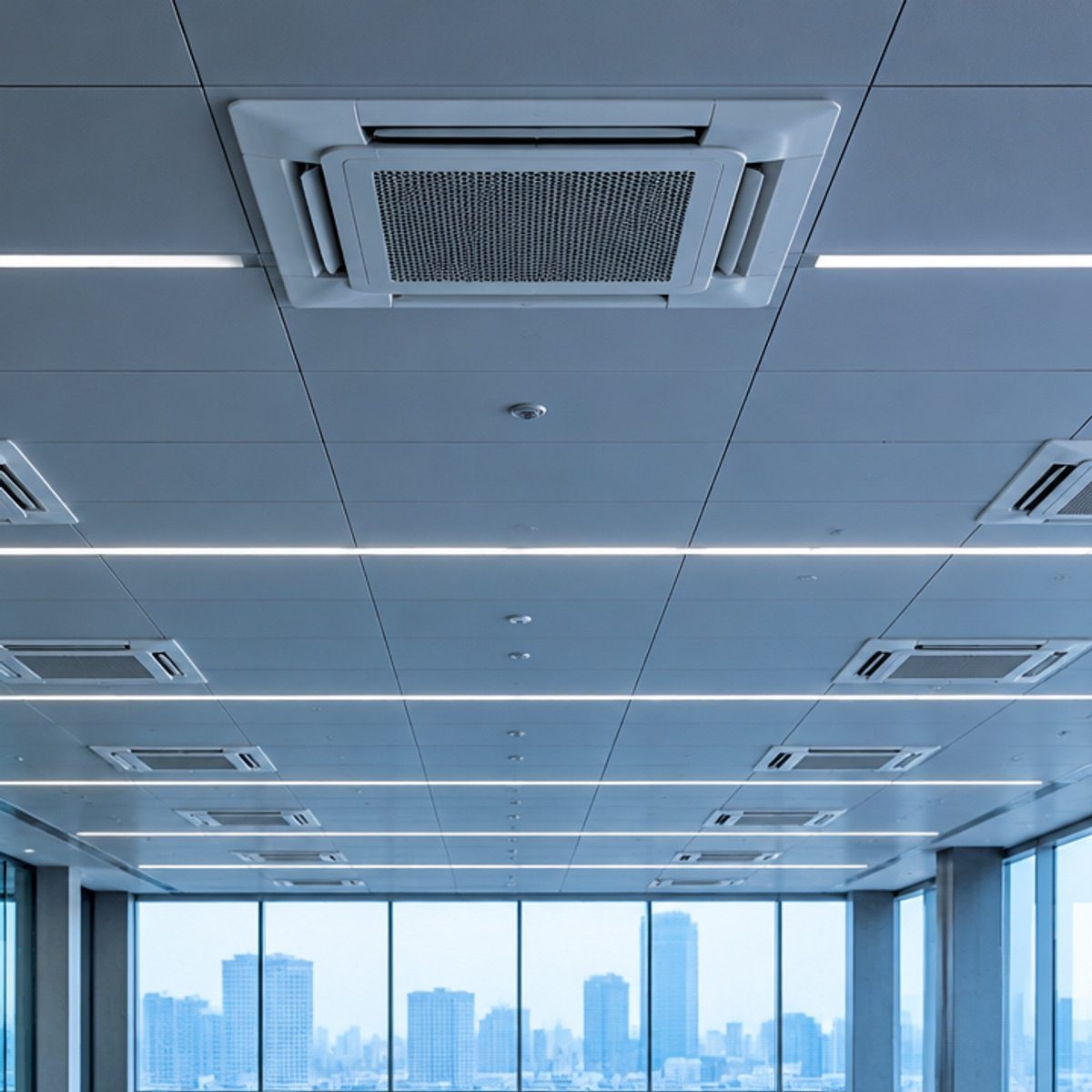
An AMC is not a discount on repairs. It is an agreement about how often equipment is serviced, how quickly faults are attended, and who pays for what. When those three things are vague, the contract becomes a source of argument exactly when you need it most — in peak summer with a failed unit. This is the checklist we use when writing one.
Clause 1: an accurate equipment inventory
Every AMC should start with a schedule listing each unit: type, tonnage, make, indoor and outdoor location, and installation year. Without it, “eight units” becomes a debate the first time a technician counts nine.
The inventory also sets the commercial basis. Pricing per unit is fairer than pricing per square foot, because a cassette at 3.5 tons and a 1-ton split are not comparable work. Attach the list as an annexure and note how additions during the term are treated — usually pro-rata for the remaining months.
Take photographs during the first inspection and attach them. When a compressor fails in month nine, a photo dated at contract start showing a rusted unit settles the question of pre-existing condition quickly.
Clause 2: visit counts and what happens in each visit
“Regular servicing” is not a commitment. A workable contract states the number of preventive visits per unit per year and what each includes:
- Filter cleaning on every visit.
- Coil and blower cleaning at a defined level (jet, foam or deep) and how many times a year.
- Drain flush and tray clean.
- Outdoor condenser cleaning.
- Electrical checks: capacitor, contactor, terminal tightness.
- A signed service sheet per unit, left on site.
Visit frequency should follow load, not a template. A 24-hour server room and a 6-hour cabin should not be scheduled identically. If a provider proposes the same count for both without asking about usage, the proposal is not based on your site.
Clause 3: breakdown response, stated in hours
This is the clause that matters during a heatwave. It should state:
Response time — how many hours until a technician is on site after a logged complaint, and whether that is during business hours or around the clock. Four hours is common for commercial contracts; next-day is standard for residential.
Resolution target — a separate number, because diagnosis and repair are different. A realistic term is attendance within four hours and a functional repair within 24–48 hours, subject to parts availability.
Escalation — a named person and number for when the response target is missed, with a defined consequence. Without a consequence, response times are aspirations.
Logging — how a complaint is raised and acknowledged. A WhatsApp message with a reference number is adequate and leaves a record.
Clause 4: parts, consumables and the money boundary
Define exactly what is included and what is chargeable. A typical preventive AMC includes labour, cleaning material and routine checks, and excludes spare parts. A comprehensive AMC includes most parts up to a value cap.
List the boundary explicitly:
| Item | Preventive AMC | Comprehensive AMC |
|---|---|---|
| Labour and cleaning | Included | Included |
| Filters, drain flush | Included | Included |
| Capacitors, contactors | Chargeable | Usually included |
| PCB, fan motor | Chargeable | Included or capped |
| Compressor | Chargeable | Often excluded or capped |
| Refrigerant | Chargeable | Defined litres/kg per year |
| Physical damage, electrical supply faults | Excluded | Excluded |
Ambiguity here is where most disputes start. A one-line table in the contract prevents months of argument.
Exclusions worth naming out loud
Every AMC has exclusions. Naming them is a sign of a serious provider, not a weakness in the offer.
- Pre-existing faults. A unit already leaking refrigerant or with a failing compressor at contract start should be repaired first, or explicitly excluded.
- Infrastructure. Stabilisers, wiring, MCBs, drain piping inside walls, and structural brackets are usually outside scope.
- Access equipment. Facade access, scaffolding or rope access for high outdoor units is priced separately.
- Force majeure and supply. Parts that are discontinued or require import carry lead times.
- Misuse. Units run with panels removed, water damage from other trades, or rodent damage.
If a proposal has no exclusions listed at all, ask for them in writing before signing.
Term, payment and review
Twelve months is standard, invoiced quarterly or half-yearly. Payment terms should be explicit: what is billed in advance, what is billed per visit, and when a breakdown call becomes chargeable.
Include a review point at six months. Fleet requirements change — a new cabin, a shifted counter, a unit added in the pantry — and a mid-term review keeps the inventory honest. It is also the natural moment to look at the service log and ask whether the visit count matched actual faults. If a unit was attended four times outside the schedule, the contract terms for that unit are wrong, not the unit.
Finally, require a written proposal before any chargeable work. Verbal approval over the phone is convenient until an invoice arrives with items nobody remembers agreeing to.
Key takeaways
- Attach a per-unit inventory with photos at contract start.
- State visits per unit per year and what each visit includes.
- Put response and resolution times in hours, with an escalation name.
- Draw the parts boundary in a table, not a sentence.
- Review the contract at six months against the actual service log.
Frequently asked questions
What should a commercial AC AMC cost?
It depends on unit count, type and visit frequency. Pricing per unit per year is standard; ask for the visit count and inclusions before comparing totals.
Is a comprehensive AMC worth it?
For units over five years old or running long hours, usually yes. For newer equipment under warranty, a preventive contract plus chargeable parts is often cheaper.
Do AMCs cover gas refills?
Most preventive contracts do not. Comprehensive contracts sometimes include a defined quantity per year. Either way, the leak should be repaired before recharging.
Transparent pricing
Featured AC services and rates
Published rates straight from the AK Aircon Services rate card — 13 categories covering service, installation, gas charging, repair, parts and material.
| Service | Split AC | Window AC |
|---|---|---|
| Dry / Lite service | ₹399 | ₹399 |
| Standard jet service | ₹549 | ₹549 |
| Foam jet service | ₹649 | ₹649 |
| Deep dismantle service | ₹1,349 | — |
| Inspection / diagnosis visit | ₹299 | — |
| Gas charging | ₹2,499 | — |
| Leakage repair | ₹1,499 | — |
| Standard installation | ₹1,499 | ₹1,499 |
| Uninstallation | ₹899 | ₹899 |
| Indoor unit shifting | ₹1,299 | — |
| PCB / electrical repair | ₹1,799 | — |
| Compressor replacement | ₹6,499 | — |
| Copper pipe (per metre) | ₹550 | ₹550 |
Prices include labour and material unless a note states otherwise. Installation material is extra. Units above 2.2 tons are quoted individually.
Need a specific price?
Tell us the unit type and the service. We confirm the exact charge before work starts.
See all 13 categoriesRates are transcribed from the AK Aircon Services rate card. Charges for unusual site conditions or non-standard equipment are confirmed before work begins.