
Preventive vs Comprehensive AMC: Which One Fits Your Building?
One covers labour, the other covers risk. Choosing between them is a question of equipment age, usage hours and how much a failure costs you.
Two contracts, same equipment, and a price difference that can be two to three times. The cheaper one is not a worse deal and the expensive one is not automatically safer — they transfer different things. Preventive transfers the labour; comprehensive also transfers part of the repair risk. Which you need depends on your units, not on a preference for cover.
What each model actually buys
Preventive AMC. A fixed number of scheduled visits per unit per year, covering cleaning, checks and labour. Spare parts, refrigerant and major repairs are chargeable at agreed rates, often with a discount.
Comprehensive AMC. The same visits plus defined parts replaced at no extra cost, sometimes including compressors up to a cap. The provider carries the risk of failure, so the annual fee is higher and the exclusions are tighter.
The practical difference appears in a bad year. With preventive cover, three capacitor failures cost you three invoices. With comprehensive cover, they are inside the fee — but so were the years when nothing failed.
The economics of risk transfer
Insurance logic applies. The provider prices the comprehensive contract at expected failure cost plus margin. If your equipment fails less than average, you pay more than you use. If it fails more, you come out ahead.
So the question becomes: is your fleet above or below average risk?
- Above average: units older than seven years, 14+ hours daily use, coastal or dusty locations, mixed brands with hard-to-source parts, or a site where a failure stops revenue.
- Below average: units under warranty, under four years old, moderate hours, one brand, easy parts availability.
New equipment under manufacturer warranty is the clearest case: paying for comprehensive cover duplicates protection you already have.
Cost of a failure, not cost of repair
Repair cost is only half the equation. The other half is what downtime costs you.
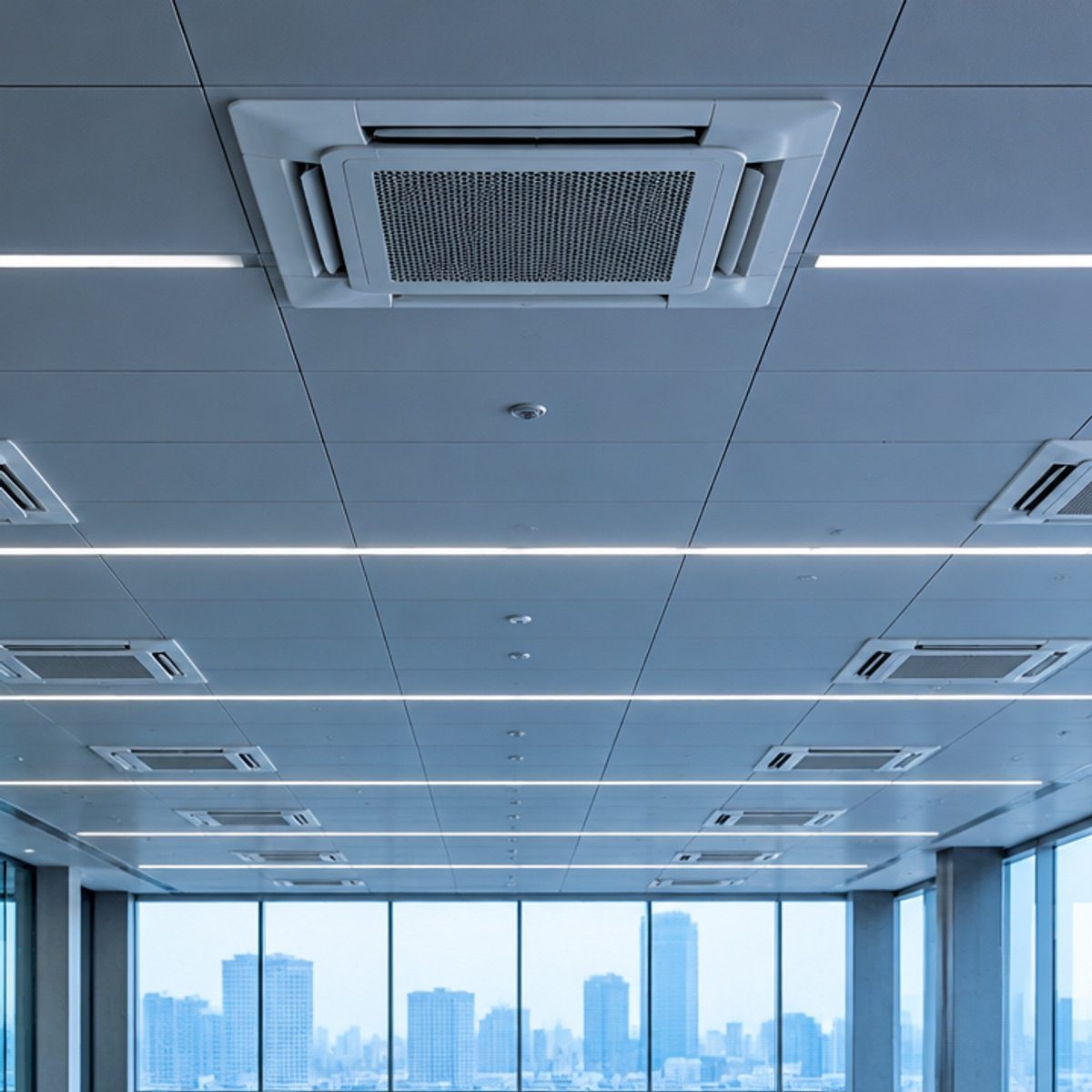
A failed cassette in a clinic waiting area stops appointments. In a restaurant it can close a section during peak hours. In a server room it threatens hardware. In an office cabin it is an inconvenience someone tolerates for a day.
That asymmetry is why a mixed contract is common and sensible: comprehensive cover on the units where failure is expensive, preventive cover on the rest. A single blanket policy over a mixed fleet is usually either over-insured or under-insured somewhere.
Write down what a day of failure costs per area before deciding. The answer often differs sharply between a cabin and a customer-facing space.
What comprehensive cover does not mean
It does not mean unlimited repairs. Typical limits:
- Value caps per year or per unit, after which charges apply.
- Compressor exclusions or a separate sub-limit, because a compressor can cost more than several years of premium.
- Refrigerant allowances — a defined quantity per year, with extra chargeable.
- Pre-existing condition exclusions — faults present at contract start.
- Damage exclusions — rodent, water, electrical surge, physical impact.
Read the cap. A comprehensive contract with a cap lower than one compressor replacement is, in practice, a preventive contract with a small buffer.
A decision rule that holds up
Score each unit on three questions:
- Is it older than seven years? (yes = 1 point)
- Does it run more than twelve hours a day? (yes = 1 point)
- Would a failure stop work, close an area or damage goods? (yes = 1 point)
Three points: comprehensive, with a cap you have actually read. Two points: comprehensive if the parts are hard to source, otherwise preventive plus a parts budget. One or zero: preventive, with a discount on chargeable repairs negotiated into the contract.
Then revisit annually. A fleet that was new at contract start is not new three years later, and the mix should shift with it.
What to negotiate either way
Regardless of model, four terms are worth pushing for.
Fixed visit dates. Pre-scheduled visits, communicated a week ahead, so your team can plan around them. Rolling “we will come in June” arrangements slip.
Parts pricing — an agreed price list for common spares, or a discount off list, so chargeable repairs are predictable.
Service records per unit, left on site and summarised at year end. This is what makes the next renewal decision evidence-based.
A short exit. Thirty or sixty days notice rather than automatic renewal with a long lock-in. If response times slip in the first summer, you want the option to move.
Both models work when the terms are explicit. Neither works when the contract is one page of adjectives.
Key takeaways
- Preventive cover buys labour; comprehensive cover buys repair risk.
- Under-warranty equipment rarely needs comprehensive cover.
- Weigh the cost of downtime, not just the cost of repair.
- Read the parts cap — it decides whether cover is real.
- Mixed contracts across one fleet are normal and often cheaper.
Frequently asked questions
Is comprehensive AMC better than preventive?
Only when failure risk is high or downtime is expensive. For newer, lightly used units, preventive cover plus chargeable parts is usually better value.
Does comprehensive AMC include the compressor?
Often it is capped or excluded, since a compressor can cost more than several years of fees. Check the sub-limit before signing.
Can I switch models mid-term?
Usually at renewal, or pro-rata if the contract allows amendment. Ask for the review clause at six months to make this practical.
Transparent pricing
Featured AC services and rates
Published rates straight from the AK Aircon Services rate card — 13 categories covering service, installation, gas charging, repair, parts and material.
| Service | Split AC | Window AC |
|---|---|---|
| Dry / Lite service | ₹399 | ₹399 |
| Standard jet service | ₹549 | ₹549 |
| Foam jet service | ₹649 | ₹649 |
| Deep dismantle service | ₹1,349 | — |
| Inspection / diagnosis visit | ₹299 | — |
| Gas charging | ₹2,499 | — |
| Leakage repair | ₹1,499 | — |
| Standard installation | ₹1,499 | ₹1,499 |
| Uninstallation | ₹899 | ₹899 |
| Indoor unit shifting | ₹1,299 | — |
| PCB / electrical repair | ₹1,799 | — |
| Compressor replacement | ₹6,499 | — |
| Copper pipe (per metre) | ₹550 | ₹550 |
Prices include labour and material unless a note states otherwise. Installation material is extra. Units above 2.2 tons are quoted individually.
Need a specific price?
Tell us the unit type and the service. We confirm the exact charge before work starts.
See all 13 categoriesRates are transcribed from the AK Aircon Services rate card. Charges for unusual site conditions or non-standard equipment are confirmed before work begins.