
Servicing Commercial AC Without Stopping Work: A Downtime Plan
A ten-unit office does not need to close for a service day. Zoning, night slots and staging turn a disruption into a schedule nobody notices.
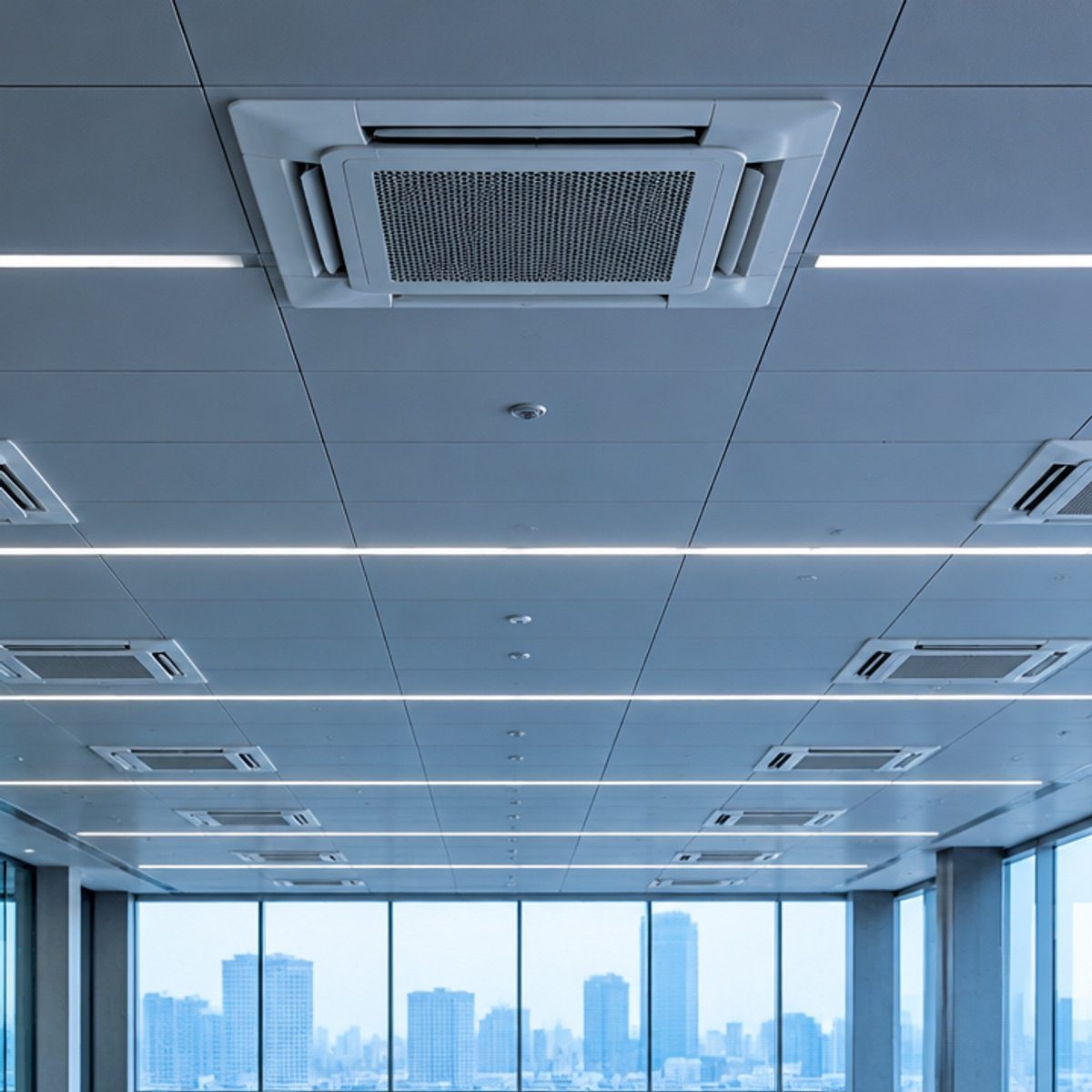
Commercial servicing has a constraint domestic work does not: the building is in use. A call centre, clinic or retail floor cannot lose cooling for four hours in the afternoon. The solution is not faster work — it is better sequencing. Here is the plan we use on occupied sites.
Start with zones, not units
Group units by area and by cooling dependency, not by floor plan order. A typical office divides into customer-facing areas, staff work areas, and back-of-house spaces such as stores and server rooms.
Customer-facing and server-room units get the least tolerant slots: early morning before opening, or overnight. Staff areas can tolerate a shorter window if the weather is mild or if portable units bridge the gap. Stores and corridors are flexible.
Write the zoning down and agree it with the facility manager. It becomes the template for every future visit, which is what makes an AMC predictable rather than disruptive.
The three scheduling patterns
Night or early-morning slots. The cleanest option where access is possible. A team of two can complete four to six splits between 7 pm and 11 pm, or a similar count before an 8 am opening. Cost is sometimes marginally higher for out-of-hours work; the alternative is lost business hours.
Staggered days. One zone per day across a week. Each day only a quarter of the floor is without cooling for two hours. This suits buildings with no night access or where security clearance is slow.
Weekend blocks. Retail and clinics that close on a fixed day get the most efficient option: a larger team, several units in parallel, everything done before Monday.
Choose one pattern per site and keep it. Switching patterns every visit is how schedules slip into peak season.
What makes a same-day service actually fast
Speed comes from preparation, not from rushing the cleaning.
- Water and power at the unit. A tap within hose reach, or pre-filled buckets, and a live socket for the jet pump. Hunting for these costs twenty minutes per zone.
- Access cleared. Desks moved, ceiling panels opened, store rooms unlocked before the team arrives.
- Two technicians, not one. One cleans, one handles water and reassembly. The saving is real on multi-unit sites.
- Parts on site. Common capacitors and contactors carried, so a failed part found during the visit is replaced the same day.
None of this is exotic. It is the difference between four units in a night and two.
Protecting the space while work happens
Water in an office is a liability. Sheets under each unit, a service bag on the wall, and a route to the drain that does not cross carpeted areas. On finished floors, a wet vacuum is worth having on site.
Ceiling tiles are fragile and expensive. The technician should remove and refit them rather than reaching through, and any cracked tile should be reported the same day, not discovered a month later.
Finally, agree who resets furniture and who checks the space afterwards. On a night job, nobody is there at 11 pm to notice a misaligned ceiling panel. A short sign-off sheet, filled by the supervisor with photographs, closes that gap.
What to do when a unit must come out of service
Occasionally a unit needs work that cannot be done in place: a compressor replacement, a PCB swap, deep dismantling of a cassette. Plan for it.
Options, in order of preference: run the remaining units harder in the affected zone if capacity allows; bring a portable unit for the room; relocate staff for the day; or schedule the work for a low-demand period such as a public holiday.
Capacity maths is worth doing once. If a zone has three units for a load that two can carry, losing one is manageable. If all three are needed, taking one out of service on a hot day is not. Knowing which is which in advance is what turns a repair into an inconvenience rather than an incident.
The procurement detail that saves money
Commercial buildings usually cannot pay per visit on the day, so the process matters as much as the work. Confirm in advance: who signs the service sheet, whether a purchase order is required before attendance, how chargeable parts are approved, and what the invoicing cycle is.
A team that arrives and cannot start work because a PO is pending has already cost you the slot. Sorting the paperwork once, at contract stage, removes that failure mode for the whole year.
Keep one named contact on each side who can approve parts by message. In practice, that single arrangement prevents most of the friction in a twelve-month contract.
Key takeaways
- Zone by cooling dependency, not by floor plan.
- Night slots usually beat lost business hours on cost.
- Pre-stage water, power and access to halve on-site time.
- Protect floors and ceiling tiles — water damage is the real risk.
- Agree PO and approval rules once, at contract stage.
Frequently asked questions
Can AC servicing be done while staff are working?
Lighter cleaning can, but jet cleaning produces water and noise. Most offices schedule it outside core hours for that reason.
How many units can be serviced in one night?
A two-person team typically completes four to six splits in a four-hour window, depending on access and water availability.
Do out-of-hours visits cost more?
Sometimes a modest premium applies. It is usually smaller than the cost of closing a customer-facing area during business hours.
Transparent pricing
Featured AC services and rates
Published rates straight from the AK Aircon Services rate card — 13 categories covering service, installation, gas charging, repair, parts and material.
| Service | Split AC | Window AC |
|---|---|---|
| Dry / Lite service | ₹399 | ₹399 |
| Standard jet service | ₹549 | ₹549 |
| Foam jet service | ₹649 | ₹649 |
| Deep dismantle service | ₹1,349 | — |
| Inspection / diagnosis visit | ₹299 | — |
| Gas charging | ₹2,499 | — |
| Leakage repair | ₹1,499 | — |
| Standard installation | ₹1,499 | ₹1,499 |
| Uninstallation | ₹899 | ₹899 |
| Indoor unit shifting | ₹1,299 | — |
| PCB / electrical repair | ₹1,799 | — |
| Compressor replacement | ₹6,499 | — |
| Copper pipe (per metre) | ₹550 | ₹550 |
Prices include labour and material unless a note states otherwise. Installation material is extra. Units above 2.2 tons are quoted individually.
Need a specific price?
Tell us the unit type and the service. We confirm the exact charge before work starts.
See all 13 categoriesRates are transcribed from the AK Aircon Services rate card. Charges for unusual site conditions or non-standard equipment are confirmed before work begins.